
Prescription Acne Treatment
Accutane, Prescribed Online
Clear persistent, cystic, or scarring acne with dermatologist-guided isotretinoin care — closely monitored and sent to the pharmacy of your choice.
Book Your Virtual Appointment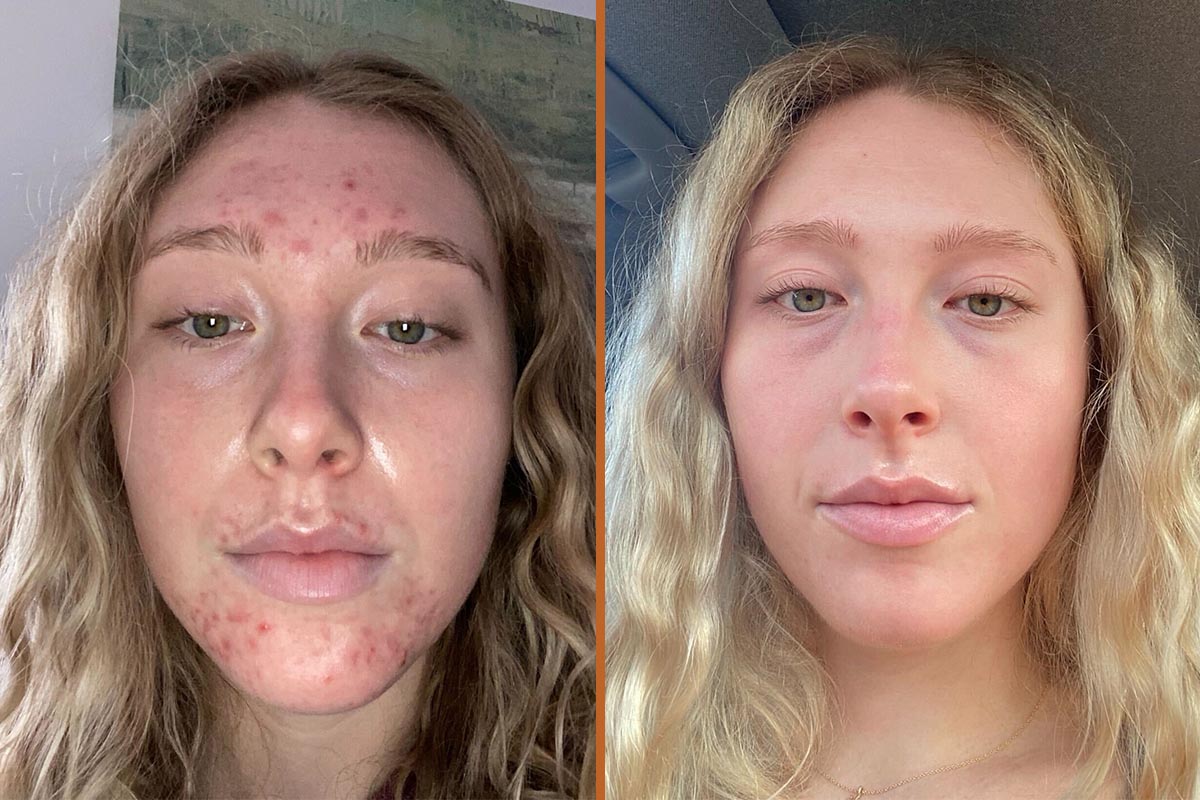
Accutane: At a Glance
- Accutane (isotretinoin) is one of the most effective treatments for persistent, cystic, or scarring acne.
- Best for severe or stubborn acne that hasn’t cleared with other treatments.
- Prescribed and monitored online by our dermatology-led team at every step.
- Sent to your pharmacy of choice; the cost of medication and lab work is separate.
- Requires regular follow-up visits and lab monitoring for safe treatment.
What is microdosed Accutane?
Microdosed (low-dose) Accutane uses a smaller daily dose of isotretinoin taken over a longer stretch of time, rather than the higher doses of a traditional course. For many people it can clear acne while keeping side effects milder and easier to live with — though the right approach always depends on your skin, your history, and your goals.
Gentler on your skin. Lower daily doses usually mean less dryness, fewer chapped lips, and milder side effects.
Easier to tolerate. A slow, steady approach can suit mild-to-moderate or persistent adult acne.
Still effective. Many patients see lasting results — your provider tracks progress and adjusts along the way.
Built around you. Dose and length are tailored to your skin instead of a one-size-fits-all course.
Isotretinoin is a prescription medication. Whether Accutane is right for you — and at what dose — is always decided together with your dermatology provider.
Wondering what kind of Accutane regimen is best for you?
Start a consultation and your dermatology provider will recommend the approach that fits your skin.
Simple, transparent pricing
Dermatologist-guided Accutane care, monitored at every step.
Each visit includes lab monitoring and dose management. The cost of labs and medication is additional — your Accutane prescription is sent to the pharmacy of your choice and may be covered by insurance.
Accutane: safety, side effects & FAQs
Accutane (isotretinoin) treats mild-to-severe, cystic, nodular, hormonal, and treatment-resistant acne. It works on all the major drivers of acne at once — excess oil, clogged pores, inflammation, and acne-causing bacteria — which is why a full course can produce long-term or even permanent clearance for many patients.
Isotretinoin shrinks the skin’s oil glands and dramatically reduces oil production, normalizes skin-cell turnover so pores stay clear, calms inflammation, and reduces acne-causing bacteria. By addressing every major cause of acne at the same time, it can lead to lasting results.
Dry lips, skin, and eyes are the most common side effects. Some people have a temporary flare early on (the “purge”), muscle aches, or fatigue. Your provider monitors side effects at every visit and can adjust your dose.
Important: Accutane must not be taken by anyone who is or may become pregnant. There is an extremely high risk of severe birth defects if pregnancy occurs while taking isotretinoin in any amount, even for a short time. Isotretinoin is regulated under the FDA’s iPLEDGE program — everyone must enroll, and patients who can become pregnant must complete monthly pregnancy testing and use two forms of contraception. We guide you through every iPLEDGE step.
Each visit includes lab monitoring. Most patients need baseline blood work before starting and periodic tests during treatment — typically a lipid panel, liver function tests, and a complete blood count — plus monthly pregnancy testing for those who can become pregnant. We coordinate your lab orders and review results before each refill. The cost of labs and medication is additional and not included in the visit price.
Mood changes on isotretinoin are rare, and large studies have not established a clear causal link, but we take it seriously. Your provider checks in on your mood at every visit and will adjust or stop treatment if any concerns arise. If you have a history of depression or mood disorders, tell your provider before starting.
Accutane makes skin more sensitive to the sun and more prone to dryness. Wear a broad-spectrum SPF 30+ daily, avoid tanning beds, use a gentle fragrance-free cleanser and a rich moisturizer, and keep lip balm handy. Avoid other retinoids and exfoliating acids during treatment.
Alcohol isn’t recommended during treatment. Isotretinoin is processed by the liver and alcohol adds strain, which can raise the liver enzymes we monitor with blood work. Your provider will advise limiting or avoiding alcohol during your course.
Your prescription is sent to the pharmacy of your choice, so you can pick it up wherever is most convenient. The cost of the medication itself is separate from your visit pricing and may be covered by insurance.
Both use the same medication but differ in dose and timeline. Standard dosing works faster over ~6–12 months; microdosing uses a lower dose over ~18–24+ months with typically milder side effects. Read our full comparison →
Ready to start your Accutane journey?
Booking takes just a few minutes—start your evaluation and a provider will confirm whether Accutane is right for you.