Traditional vs. Microdose Accutane: What’s the Difference?

If you’ve been researching Accutane (isotretinoin), you’ve probably come across two very different approaches: the traditional, standard-dose course and the newer microdose (low-dose) protocol. Both use the same medication and both can lead to lasting clearance — but they differ in dose, timeline, side effects, and who they’re best suited for. Here’s how they compare.

What is traditional (standard-dose) Accutane?

Traditional Accutane is the classic, higher-dose course most people picture. Dosing is calculated from your body weight and acne severity, with the goal of reaching a target cumulative dose over roughly 6 to 12 months. Because the dose is higher, results tend to come faster and the odds of long-term or permanent clearance after a single course are high. The trade-off is that side effects — very dry lips and skin, occasional muscle aches, and the early “purge” — are more pronounced, and blood-work monitoring is especially important.

Standard dosing is typically the stronger choice for moderate-to-severe, cystic, nodular, or scarring acne, or acne that hasn’t responded to topicals and antibiotics.

What is microdose (low-dose) Accutane?

Microdose Accutane uses a lower daily dose taken over a longer period — often 18 to 24 months or more. The idea is to reach a similar cumulative benefit while keeping side effects milder and more manageable. Patients on a microdose protocol generally report less dryness and fewer day-to-day side effects, with a gentler, more gradual improvement.

Microdosing is an increasingly popular option for people with persistent mild-to-moderate acne that hasn’t cleared with topicals, or for those who want strong long-term results without committing to a high-dose course. It’s a clinical trend backed by a growing body of studies suggesting comparable clearance with a better side-effect profile for the right patients.

The key differences at a glance

  • Dose: Standard uses a higher daily dose; microdose uses a lower daily dose.
  • Duration: Standard runs ~6–12 months; microdose runs ~18–24+ months.
  • Side effects: More noticeable on standard dosing; typically milder on microdose.
  • Speed of results: Faster on standard dosing; slower and more gradual on microdose.
  • Best for: Standard for severe, cystic, or scarring acne; microdose for persistent mild-to-moderate acne or anyone prioritizing fewer side effects.

Which one is right for you?

Dose should always be a collaborative decision between you and your provider. The right choice depends on your acne severity, how you’ve responded to past treatments, your preferred timeline, cost considerations, and your overall health. Both approaches require the same safety oversight — including iPLEDGE enrollment, regular check-ins, and lab monitoring — regardless of dose.

Whichever route fits, a dermatology provider will tailor your dose and monitor you throughout treatment to keep it safe and effective.

This article is for general education and is not medical advice. Accutane (isotretinoin) carries serious risks, including severe birth defects if taken during pregnancy, and must be used under the supervision of a licensed provider through the iPLEDGE program.

Meet the Firming Duo Inside our “She’s A Peach” Peptide Serum

The Firming Duo Inside She’s a Peach | Allme Health

Two actives. One job: helping skin look firmer, smoother, and more bouncy. Here’s the science behind the peptide-and-amino-acid pairing at the heart of our dual peptide serum — and why we chose each one.

Firmness is a collagen story. As skin matures, the collagen and elastin scaffolding that keeps it springy starts to thin and slacken — and that’s what reads, in the mirror, as fine lines and a loss of “snap.” The smartest way to support it isn’t a single hero ingredient; it’s a pairing that works on the structure from two complementary angles. That’s exactly how we built She’s a Peach.

The two stars are Hexapeptide-11, a fermentation-derived signaling peptide, and Dipalmitoyl Hydroxyproline, a lipid-wrapped form of collagen’s own signature amino acid. One sends the message; the other delivers the building block. Let’s meet them.

ACTIVE 01Hexapeptide-11: the firming signal

Signaling peptide

What it is

Hexapeptide-11 is a true peptide — a precise six-amino-acid sequence (Phe-Val-Ala-Pro-Phe-Pro). It isn’t synthesized in a harsh chemical bath; it’s produced through yeast fermentation biotechnology, then purified by filtration and chromatography to isolate the exact peptide.1 It’s the same sequence found in some of yeast’s own resilience proteins, including the heat-shock protein hsp70.1

Why we love it

It behaves like a message to your skin cells. In the research literature, Hexapeptide-11 has been shown to increase collagen synthesis and upregulate growth factors along with matrix and heat-shock proteins — the cellular machinery skin uses to rebuild and stay resilient.2

And it’s not just lab theory. In a clinical use study, Hexapeptide-11 was applied to half the face of healthy volunteers twice daily — and by week four, treated skin showed improved elasticity and a better deformation response (how well skin springs back).2

6
amino acids in a single, precise sequence (FVAPFP)1
4 wks
twice-daily use linked to improved elasticity in a half-face study2
hsp70
resilience proteins its sequence mirrors in nature1

A half-face design is a lovely thing, because each person acts as their own control — the untreated side is the comparison. That’s why this kind of result is more persuasive than a simple before-and-after.

ACTIVE 02Dipalmitoyl Hydroxyproline: collagen’s own amino acid, delivered

Lipoamino acid

What it is

Here’s the elegant part. Hydroxyproline is the amino acid that is essentially unique to collagen — it’s the structural signature of the protein we’re trying to support. Dipalmitoyl Hydroxyproline takes that amino acid and wraps it in two palmitic-acid (fatty) chains.3 Those fatty “tails” make it oil-loving, so it partners beautifully with the skin’s own lipid barrier — a smart delivery trick that the best modern peptides also use.

Why we love it

It’s a multitasker. As formulated in our serum it’s understood to work in three complementary ways: supporting collagen-fiber remodeling and contraction, helping shield elastic fibers from enzymatic breakdown, and scavenging free radicals.4 Firming, protecting, and defending — at once.

It also has the kind of in-vivo testing that makes a formulator smile. In the manufacturer’s clinical evaluation, Dipalmitoyl Hydroxyproline delivered a 32% reduction in the appearance of wrinkles versus placebo.4 It’s no surprise it shows up in some of the most respected firming and eye treatments on the market.5

One active sends the firming signal. The other supplies collagen’s own raw material — and is built to actually get where it’s going.

THE PAIRINGWhy two is better than one

This is the logic behind the “dual” in dual serum. Skin firmness depends on both signaling (telling cells to build) and substrate plus protection (giving them material to build with, and defending what’s already there). Hexapeptide-11 leans into the first; Dipalmitoyl Hydroxyproline leans into the second. Together they approach the same goal — visibly firmer, smoother, bouncier-looking skin — from two directions rather than one.

And because both are designed with delivery in mind — one fermentation-purified to a clean low-molecular-weight peptide, the other lipid-wrapped to travel with your barrier — this isn’t a formula relying on actives that just sit on the surface.

IN YOUR ROUTINEWhat to expect

  • Use it consistently. The clinical signal for these actives shows up over weeks of twice-daily use — morning and night is the move.2
  • Think firmness and bounce. The best-supported benefits are improved elasticity, a smoother surface, and a softer look to fine lines — a fresher, more “lit-from-within” finish.
  • It plays well with others. Pair it with daily SPF (your collagen’s best friend) and a gentle, barrier-supporting routine to give these actives the best canvas.
  • It’s kind to skin. Both actives are well tolerated, which is why they suit a daily, long-game approach to firmer-looking skin.

The bottom line

She’s a Peach pairs a clinically studied firming peptide with a clever, collagen-derived amino-acid active built to actually penetrate. It’s a thoughtful, science-led approach to one of skincare’s most-wanted results — firmer, smoother, more resilient-looking skin — and we’re genuinely proud of it. Give it a few weeks of consistent use and let your skin show you.

References

  1. Peptamide™ 6 (Hexapeptide-11): origin, sequence and yeast-fermentation manufacturing. INCIGuide. inci.guide/peptides/peptamidetm-6
  2. Gorouhi F, Maibach HI. Role of topical peptides in preventing or treating aged skin (review summarizing the Peptamide-6 / Hexapeptide-11 half-face study). Int J Cosmet Sci. 2009;31(5):327–345. onlinelibrary.wiley.com
  3. Dipalmitoyl Hydroxyproline: synthesis from hydroxyproline and palmitic acid; INCI profile. SpecialChem. specialchem.com
  4. SEPILIFT™ DPHP (Dipalmitoyl Hydroxyproline): triple firming mechanism and in-vivo wrinkle data (−32% vs placebo). SEPPIC / Knowde product literature. knowde.com
  5. Examples of prestige firming/eye products formulated with Dipalmitoyl Hydroxyproline. MySkinRecipes ingredient profile. myskinrecipes.com

Allme Health products are cosmetics intended to improve the appearance of skin; they are not drugs and are not intended to diagnose, treat, cure, or prevent any disease. Individual results vary. The Hexapeptide-11 clinical reference is a small half-face study, and the Dipalmitoyl Hydroxyproline wrinkle figure is from manufacturer testing — both are encouraging, and we share them transparently. This article is general education, not individual medical advice.

Shop She's A Peach Peptide Serum

Do Peptide Creams Actually Work for Anti-Aging? The Evidence

“Peptide” has become one of the most-used words on a skincare label. But two questions decide whether a peptide cream is worth your money: can the peptide get into your skin, and once it’s there, does it measurably do anything? Here’s what the research actually shows.

Peptides are short chains of amino acids — the same building blocks that make up the proteins in your skin. The appeal is intuitive: certain peptides act as biological “messages” that can tell skin cells to make more collagen, calm inflammation, or behave the way younger skin does.6 That’s the marketing promise. The clinical reality is more interesting, and more honest, than most product pages let on.

At Allme, we think you should understand an ingredient before you build a routine around it. So let’s separate the chemistry from the copywriting.

01 / THE BASICSWhat peptides are supposed to do

Cosmetic peptides are usually grouped by how they’re meant to work. A 2025 review in the International Journal of Molecular Sciences describes four broad categories:1

  • Signal peptides — bind to receptors on skin-cell surfaces and prompt fibroblasts to produce more collagen and elastin. Palmitoyl pentapeptide-4 (Matrixyl) is the best-known example.
  • Enzyme-inhibiting peptides — slow the enzymes (like matrix metalloproteinases) that break down existing collagen.
  • Carrier / transport peptides — ferry trace minerals such as copper into skin to support collagen-building enzymes. Copper tripeptide-1 (GHK-Cu) is the classic.
  • Neurotransmitter-inhibiting peptides — the “botox-like” peptides (e.g., acetyl hexapeptide-8, sold as Argireline) designed to soften expression lines.

Those mechanisms are real in the lab. The catch is that all of them depend on one thing the label rarely mentions: the peptide has to physically reach the living layers of your skin first.

02 / THE HARD PARTThe bioavailability problem

Your skin’s outermost layer, the stratum corneum, is a lipid-rich barrier built specifically to keep things out. Most cosmetic peptides are water-loving (hydrophilic) and relatively large — exactly the profile that struggles to cross an oily barrier. Reviewers are blunt about this: peptides are “not inherently designed to penetrate the skin,” and their size and water-affinity are significant obstacles to delivery.1

How big a problem is it? Look at the published penetration data for acetyl hexapeptide-8 (Argireline), and you’ll see why no honest clinician promises miracles:

~30%
of applied peptide reached the receptor fluid after 2 hours in one early in vitro study1
0.22%
penetrated the stratum corneum after 24 hours in a separate study — with none crossing the full skin2
>31×
more peptide delivered when the skin barrier was bypassed with microneedles3

Those first two numbers come from different labs studying the same peptide — and they disagree by two orders of magnitude. That’s the honest state of the science: penetration is real but highly variable, and it depends enormously on how the product is made. When researchers used tape-stripping to map where the peptide ended up, the highest concentrations stayed in the outermost layers of the stratum corneum, with less and less reaching deeper.1

The delivery of hydrophilic macromolecules such as peptides through the skin is difficult — and for some peptides, reaching the deeper dermis through a cream may simply not happen.1

This has a practical consequence worth saying plainly: for the “botox-like” peptides specifically, the published in-vivo studies have not confirmed that topical application actually relaxes facial muscles the way the marketing implies.1 Any visible benefit is more likely happening at the surface — hydration, smoothing, light-reflection — than deep at the neuromuscular junction.

03 / THE FIXWhy formulation changes everything

If raw penetration is the bottleneck, formulation is the lever. The evidence points to a few delivery strategies that meaningfully improve how much peptide gets in:

Fatty-acid “tails” (lipidation)

Attaching a fatty acid to a peptide makes it more oil-soluble, so it slips through the lipid barrier more easily. This is exactly why palmitoyl pentapeptide-4 (Matrixyl) penetrates better than the bare KTTKS peptide it’s built from — the palmitic-acid tail does the heavy lifting. Industry safety reviewers note that the charged, water-loving parent peptide struggles to cross intact skin until that fatty acid is added.4

Emulsion design and pH

The type of cream base matters. For acetyl hexapeptide-8, oil-in-water and multiple water-in-oil-in-water emulsions delivered significantly more peptide than a simple water-in-oil base, and a slightly acidic formula improved the peptide’s solubility and movement into the epidermis.1 A well-formulated peptide cream and a poorly formulated one can contain the “same” active and behave completely differently.

Newer carriers

A 2026 systematic review notes that peptide delivery to target cells “may be enhanced by lipid conjugation or nanoparticle” systems — the direction much of current formulation research is heading.5

04 / THE PAYOFFDoes the efficacy data hold up?

Here’s where we have to be careful — and where Allme will give you the caveat most blogs skip.

The largest recent synthesis, a 2026 systematic review and meta-analysis in Frontiers in Medicine, pooled 19 randomized controlled trials covering 1,341 participants (average age ~50). Peptides significantly improved skin hydration and brightness, with a modest but statistically significant effect on wrinkle reduction (mean difference 0.27, p = 0.04). Effects on elasticity and skin density were inconsistent, and the peptides were very well tolerated.5

The caveat that matters

In that meta-analysis, roughly 92% of participants were taking oral collagen peptides — only about 8% used topical formulations.5 The strongest wrinkle signal came from oral polypeptides (mean difference 1.5, p = 0.01), not creams. So the single biggest pooled dataset tells us more about peptide supplements than peptide creams. The topical evidence base is genuinely thinner.

That said, the topical evidence is not empty — for a few specific peptides it’s reasonably solid:

  • Palmitoyl pentapeptide-4 (Matrixyl). A 12-week split-face randomized controlled trial (Robinson et al., International Journal of Cosmetic Science, 2005) found improvements in wrinkle depth and skin roughness on the treated side versus the vehicle control.4,7 Split-face designs are among the more rigorous in cosmetic research because each person serves as their own control. Independent safety reviewers confirm it has been tested in multiple controlled clinical studies and is well tolerated.4
  • Acetyl hexapeptide-8 (Argireline). Several studies report reductions in wrinkle depth — for example, around 30% after a month and up to roughly 49% after four weeks of daily use of a 10% formulation in the cited trials — even though the muscle-relaxing mechanism itself wasn’t confirmed topically.1
  • Palmitoyl tripeptide-1. In a small study, a cream applied twice daily for four weeks produced statistically significant reductions in wrinkle length, depth, and roughness.6

Notice the pattern: the peptides with the better clinical track record (the palmitoyl signal peptides) are also the ones engineered to penetrate. Delivery and efficacy travel together.

05 / IN PRACTICEHow to read a peptide product like a clinician

You don’t need a chemistry degree to make a smarter choice. A few honest filters:

  • Favor lipidated signal peptides. Names starting with “palmitoyl” (e.g., palmitoyl pentapeptide-4, palmitoyl tripeptide-1) are designed to cross the barrier and have the most supportive human data.
  • The base is part of the active. A peptide in a thoughtful emulsion outperforms the same peptide in a poor one. Formulation isn’t a footnote.
  • Set realistic expectations. The best-documented topical benefits are smoother texture, better hydration, brightness, and a modest softening of fine lines — not a replacement for in-office procedures or prescription retinoids.
  • “Botox in a jar” is overstated. The evidence does not support topical peptides reproducing injectable neuromodulators. Treat that phrase as a red flag, not a feature.

The honest bottom line

Topical peptides are a legitimate, well-tolerated category with real — if modest — anti-aging benefits, strongest for a handful of penetration-optimized signal peptides. They are not magic, the deeper claims often outrun the data, and the single largest body of evidence actually sits with oral peptides rather than creams. A good peptide cream is a reasonable, low-risk addition to a routine. It is a supporting actor, not the lead.

If you’d like a routine built around ingredients that match your skin and your goals — and a clinician who’ll tell you when something isn’t worth it — that’s exactly what we do at Allme.

References

  1. Zdrada-Nowak J, Surgiel-Gemza A, Szatkowska M. Acetyl Hexapeptide-8 in Cosmeceuticals — A Review of Skin Permeability and Efficacy. Int J Mol Sci. 2025;26(12):5722. pmc.ncbi.nlm.nih.gov/articles/PMC12193160
  2. Kraeling MEK, Zhou W, Wang P, Ogunsola OA. In vitro skin penetration of acetyl hexapeptide-8 from a cosmetic formulation. Cutan Ocul Toxicol. 2015;34(1):46–52.
  3. Zhang S, Qiu Y, Gao Y. Enhanced delivery of hydrophilic peptides in vitro by transdermal microneedle pretreatment. Acta Pharm Sin B. 2014;4(1):100–104.
  4. Cosmetic Ingredient Review. Safety Assessment of Pentapeptide-4, Palmitoyl Pentapeptide-4 and related ingredients. CIR, 2024. cir-safety.org
  5. Nukaly HY, Halawani IR, et al. Oral and Topical Peptides as Anti-Aging Agents: A Systematic Review and Meta-Analysis of Randomized Controlled Trials. Front Med. 2026;13:1618306. frontiersin.org
  6. Pai VV, Bhandari P, Shukla P. Topical Peptides as Cosmeceuticals — peptide classification and palmitoyl tripeptide-1 clinical data, summarized in: Peptides: Emerging Candidates for the Prevention and Treatment of Skin Senescence: A Review. Biomolecules. 2025;15(1):88. mdpi.com/2218-273X/15/1/88
  7. Robinson LR, et al. Topical palmitoyl pentapeptide provides improvement in photoaged human facial skin. Int J Cosmet Sci. 2005;27(3):155–160.

This article is for general educational purposes and reflects the published literature as of 2026; it is not individual medical advice and does not establish a clinician–patient relationship. Cosmetic peptides are regulated as cosmetics, not drugs, and are not intended to diagnose, treat, cure, or prevent any disease. Talk with a licensed clinician about what’s appropriate for your skin.

Azelaic Acid: What No One Is Talking About


If you’ve spent any time in skincare communities lately, you’ve probably heard about azelaic acid. It shows up on ingredient lists, in dermatologist-approved routines, and all over social media as a hero ingredient for acne, rosacea, hyperpigmentation, and uneven skin tone. And the hype is largely deserved — azelaic acid is one of the most versatile, well-studied topical ingredients available.

But here’s what most of that content leaves out: not all azelaic acid is the same. The 10% serum you picked up at Sephora and the 20% cream your dermatologist can prescribe are categorically different products — and using the wrong one for your skin concern can mean months of frustrating, underwhelming results.

At allme, we believe you deserve to understand exactly what you’re putting on your skin and why. So let’s break it down.


What Is Azelaic Acid, and Why Does It Work?

Azelaic acid is a naturally occurring dicarboxylic acid originally derived from grains like wheat, rye, and barley. It works through several distinct mechanisms that make it uniquely useful across a range of skin conditions:

  • Antimicrobial: It inhibits the growth of Cutibacterium acnes (the bacteria involved in acne) without the resistance risk associated with antibiotic treatments.
  • Anti-inflammatory: It reduces redness and calms the inflammatory response that drives both acne and rosacea flares.
  • Keratolytic: It gently normalizes the way skin cells shed, preventing the clogged pores that lead to breakouts.
  • Tyrosinase inhibitor: It blocks the enzyme responsible for excess melanin production, making it effective for post-inflammatory hyperpigmentation (PIH) and melasma.

Unlike many actives, azelaic acid is also considered safe during pregnancy — a significant advantage for those navigating skin concerns while pregnant or breastfeeding, where options like retinoids and salicylic acid are off the table.

It’s gentle enough for sensitive skin, non-photosensitizing (meaning you can use it morning or night), and compatible with most other skincare ingredients. On paper, it sounds almost too good to be true. So why doesn’t everyone get the results they’re looking for?

Often, the answer comes down to concentration.


OTC Azelaic Acid: What You’re Getting

Over-the-counter azelaic acid products are widely available and typically formulated at concentrations between 5% and 10%. You’ll find them in serums, gels, and creams from brands like The Ordinary, Paula’s Choice, Naturium, Anua, Inkey List, and many others.

At these concentrations, azelaic acid can deliver real benefits — particularly for mild skin concerns, maintenance, or those with very sensitive skin who need to start low and go slow. It can help with:

  • Mild post-acne marks and redness
  • General brightening and evening of skin tone
  • Calming occasional redness or irritation

However, there are important limitations to what OTC formulations can achieve. At 5–10%, the concentration of azelaic acid is simply not high enough to meaningfully address moderate-to-severe acne, active rosacea, or established hyperpigmentation and melasma. You may notice a subtle improvement in overall tone or a slight reduction in redness, but if you’re dealing with persistent breakouts, visible flushing, or stubborn dark spots, an OTC product is unlikely to move the needle in any significant way.

This is one of the most common reasons people conclude that azelaic acid “doesn’t work” — when in reality, they haven’t yet had access to the concentration that works.


Prescription Azelaic Acid: A Different Category Entirely

Prescription azelaic acid is formulated at 15% or 20% — a meaningful and clinically significant difference from what’s available over the counter.

In the United States, there are two FDA-approved prescription azelaic acid formulations:

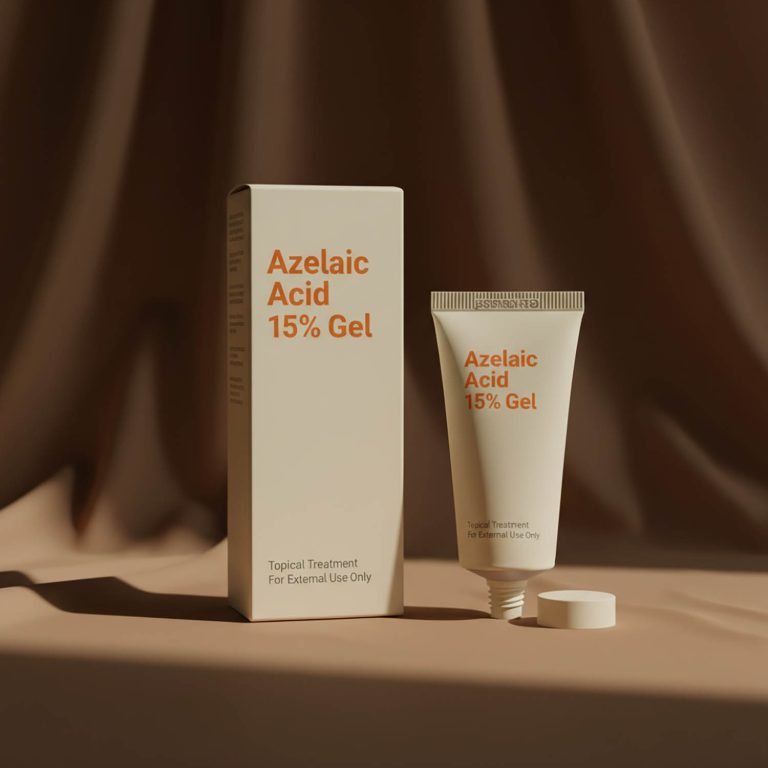
Finacea (Azelaic Acid 15% Gel)

Finacea is FDA-approved for the treatment of inflammatory rosacea (the kind with persistent redness, papules, and pustules). The gel formulation is lightweight and absorbs well, making it a good fit for those with oily or combination skin. Studies have shown significant reductions in inflammatory lesion counts and visible redness with consistent use.

Azelex (Azelaic Acid 20% Cream)

Azelex is FDA-approved for the treatment of acne vulgaris. At 20%, it’s the highest concentration available in a prescription product, and the cream vehicle makes it a strong option for those with dry or sensitive skin. It’s particularly effective for comedonal and inflammatory acne, and its tyrosinase-inhibiting properties make it a go-to for patients dealing with concurrent post-acne hyperpigmentation.

Both formulations have been through rigorous clinical trials demonstrating their efficacy and safety profile. When used correctly and consistently, prescription azelaic acid can produce meaningful improvements in acne clearance, rosacea control, and hyperpigmentation reduction — often where OTC options have already been tried and fallen short.


OTC vs. Prescription Azelaic Acid: Side by Side

 OTC Azelaic AcidPrescription Azelaic Acid
Concentration5–10%15–20%
FDA-approvedNo (cosmetic claim only)Yes (acne and rosacea)
Best forMild concerns, maintenanceModerate-to-severe acne, rosacea, PIH, melasma
AvailabilitySephora, Amazon, drugstoresRequires a prescription
FormulationsSerums, gels, creamsGel (Finacea), Cream (Azelex)
Cost$10–$50Varies; often covered by insurance; generics available
Proven efficacyLimited clinical data at these strengthsBacked by clinical trials

Who Is Prescription Azelaic Acid Right For?

Prescription-strength azelaic acid is worth considering if you:

  • Have persistent acne that hasn’t responded well to OTC treatments
  • Are dealing with rosacea — especially inflammatory rosacea with redness, papules, or pustules
  • Struggle with post-inflammatory hyperpigmentation (dark marks left behind after breakouts)
  • Have been diagnosed with or suspect melasma
  • Are pregnant or breastfeeding and need an effective acne or pigmentation treatment that’s considered safe
  • Have sensitive skin that hasn’t tolerated retinoids, benzoyl peroxide, or other common actives
  • Are looking for an antibiotic-free acne treatment option

It’s also worth knowing that prescription azelaic acid is frequently used in combination with other treatments — retinoids, topical antibiotics, niacinamide — as part of a comprehensive skincare regimen. The right combination depends on your specific skin concerns, skin type, and history.


Common Azelaic Acid Mistakes (And How to Avoid Them)

Even when you have access to the right concentration, how you use azelaic acid matters. Here are the most common mistakes we see:

Using too much, too fast. Azelaic acid can cause tingling, redness, or mild irritation when first introduced — especially at prescription strength. Starting with every-other-day application and working up to daily use helps your skin adjust.

Expecting overnight results. Azelaic acid is a slow burn. Most patients see meaningful improvement at 4–8 weeks, with continued progress through 12–16 weeks of consistent use. Stopping too soon is one of the top reasons people don’t see the results they’re hoping for.

Layering it incorrectly. Azelaic acid plays well with most ingredients, but layering multiple actives without guidance can overwhelm the skin barrier or dilute efficacy. Getting a thoughtful regimen mapped out makes a real difference.

Using OTC when prescription is what’s needed. As we’ve covered — if your concern is moderate to significant, the concentration matters more than consistency alone.


How Allme Can Help

At Allme, our providers are experienced in working with azelaic acid across a range of skin concerns — and in knowing when it’s the right tool, at what strength, and how to integrate it into a regimen that actually works for your skin.

When you visit Allme, you’re not getting a one-size-fits-all protocol. You’re getting a real conversation with a dermatology provider who will look at your full picture: your skin concerns, your skin type, your history with other treatments, your lifestyle, and your goals. From there, we can determine whether prescription azelaic acid makes sense for you, whether it should be used as a standalone treatment or alongside other actives, and how to introduce it in a way that minimizes irritation and maximizes results.

We take an integrative approach at Allme — meaning we look at both the topical tools available to us and the broader factors that influence your skin, from hormones and gut health to diet and stress. Azelaic acid fits beautifully into that kind of comprehensive care because it’s effective, gentle, and works synergistically with both conventional and holistic approaches.

Whether you’ve tried azelaic acid before without success, are hearing about it for the first time, or have been using an OTC version and wondering if prescription strength might make a difference — we’re here to help you figure it out.


The Bottom Line

Azelaic acid is genuinely one of the most well-rounded ingredients in dermatology — but the version you can buy off the shelf and the version a provider can prescribe are not interchangeable. Concentration matters. Formulation matters. And having guidance on how to use it within a regimen tailored to your skin matters most of all.

If you’re dealing with acne, rosacea, hyperpigmentation, or any of the conditions azelaic acid is known to address, it’s worth having a real conversation about whether prescription-strength treatment is right for you.

Ready to find out if azelaic acid belongs in your routine? Book a consultation with Allme today — an asynchronous photo visit is just $69, with video consultations available for $119 for those who want a more in-depth conversation. We’ll take a look at your skin, your history, and your goals, and figure out the best path forward together.


prescription azelaic acid, azelaic acid OTC vs prescription, azelaic acid for acne, azelaic acid for rosacea, azelaic acid 20 percent, azelaic acid finacea, best azelaic acid